
Website for a Timber Business: What Bulk Buyers Look For Before They Call
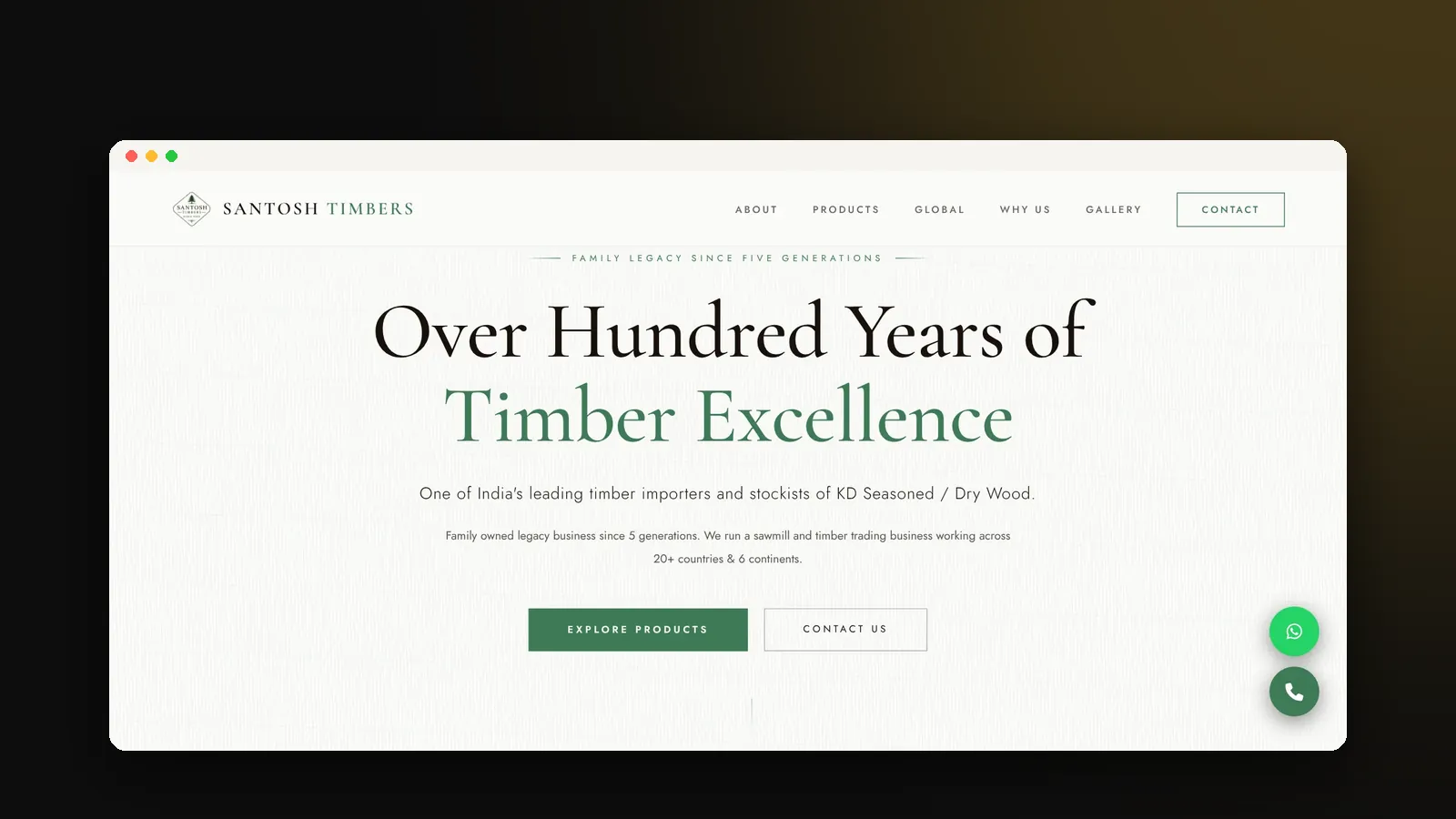
A website for a timber business has to answer one question for a bulk buyer: is this a real, established supplier I can trust with a large order? That means a clear product catalogue, proof of scale and experience, the species and grades you deal in, and a direct way to send an enquiry.
Santosh Timbers is one of India's largest timber importers. For years, the business ran on word of mouth and personal networks, and it had no website at all. We built one from scratch, with a full product catalogue and a direct enquiry form. Here is what went into it, and what any timber or wood trading business can learn from it.
The problem: a large business that looked invisible
Timber is a relationship trade. Many of the biggest suppliers grew without ever needing a website. But buyers have changed. A contractor, furniture maker or new trading partner now searches a supplier's name before the first call, as part of their due diligence.
When that search returns nothing, the buyer has no way to confirm they are dealing with an established company. A business with real scale ends up looking smaller than a competitor half its size with a decent website.
What a timber business website needs
1. Proof of scale, early
Bulk buyers want to know you can handle their order. The opening sections should make the size and history of the business obvious: years in the trade, where you import from, the volumes you deal in, and who you supply. Every section of the Santosh Timbers site was built around these trust signals, in the order a bulk buyer looks for them.
2. A product catalogue buyers can browse
A buyer looking for a specific timber should not have to call to find out whether you stock it. A clear catalogue listing the species, types and forms you supply (logs, sawn timber, seasoned wood and so on) lets the buyer check fit in minutes. It also gives Google pages to rank for the exact products people search for.
3. One clear way to enquire
For bulk orders, the enquiry matters more than anything else. We gave the site a direct enquiry form, with the phone number and WhatsApp easy to reach. Ask only for what you need to quote: the product, rough quantity and the buyer's contact details. Long forms put people off.
4. Built for buyers abroad too
Timber is a global trade. The site should be fast for visitors anywhere, written in clear English, and make it obvious which markets you serve. A buyer in another country forms an opinion from your website before they ever hear your voice.
5. A design that matches the business
A long-established business deserves a site that looks established: calm, confident, with real photos of your yard, stock and operations. A cheap template quietly undoes years of reputation.
The result
Santosh Timbers went from no website to a professional online presence that matches the actual scale of the business. New buyers now have a reason to trust the company before the first conversation even happens, which is exactly where a bulk supplier wins or loses a deal.
Read the full Santosh Timbers case study.
A quick checklist for your timber business website
- Does the site show your scale and experience within the first scroll?
- Can a buyer see the species and products you supply without calling?
- Is there one simple way to send an enquiry?
- Does it load fast and read well for buyers in other countries?
- Does it look as established as your business really is?
Want a website like this for your business?
We build websites for manufacturers, traders and B2B suppliers, designed from a blank canvas to win serious enquiries. If you are weighing marketplaces against your own site, read IndiaMART vs your own website. Or get a free website audit and we will show you what buyers see when they look you up.